
Last updated November 14, 2026
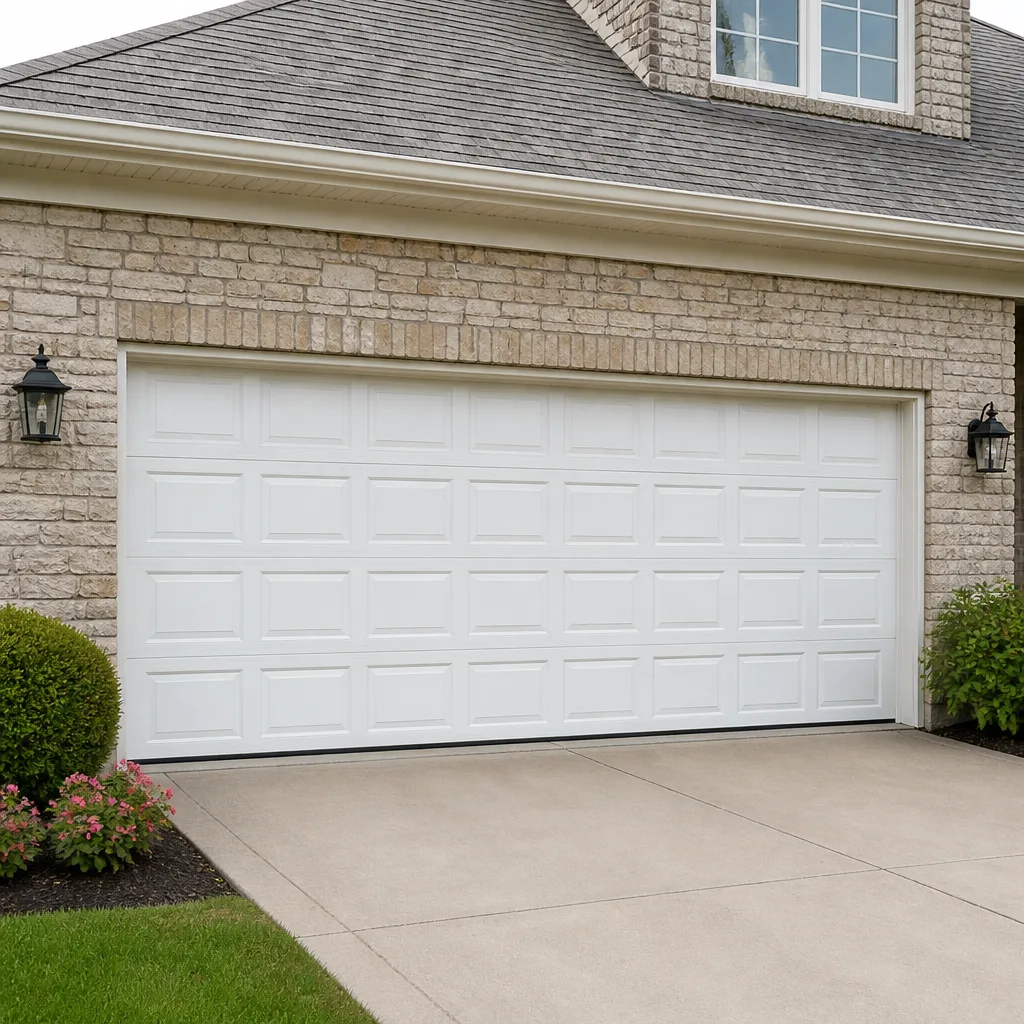 Raised-panel steel
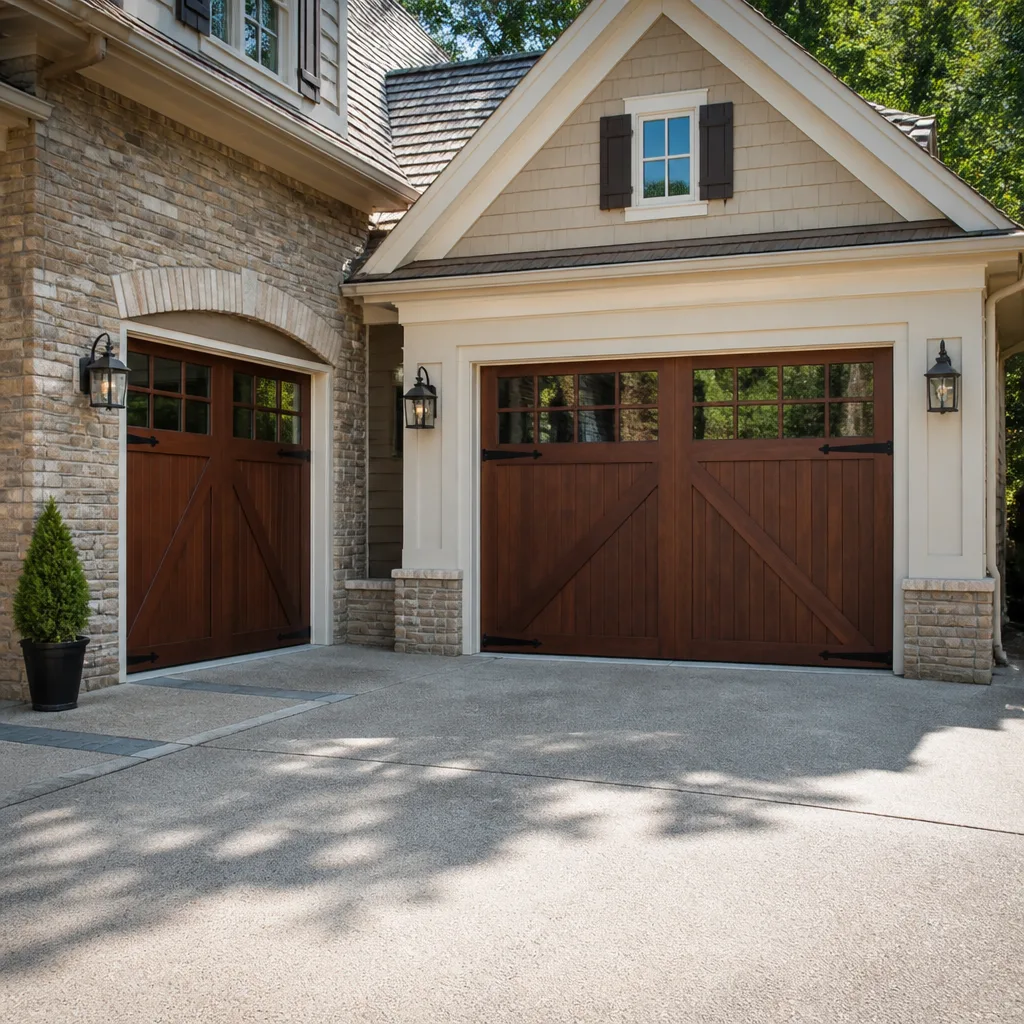 Carriage house
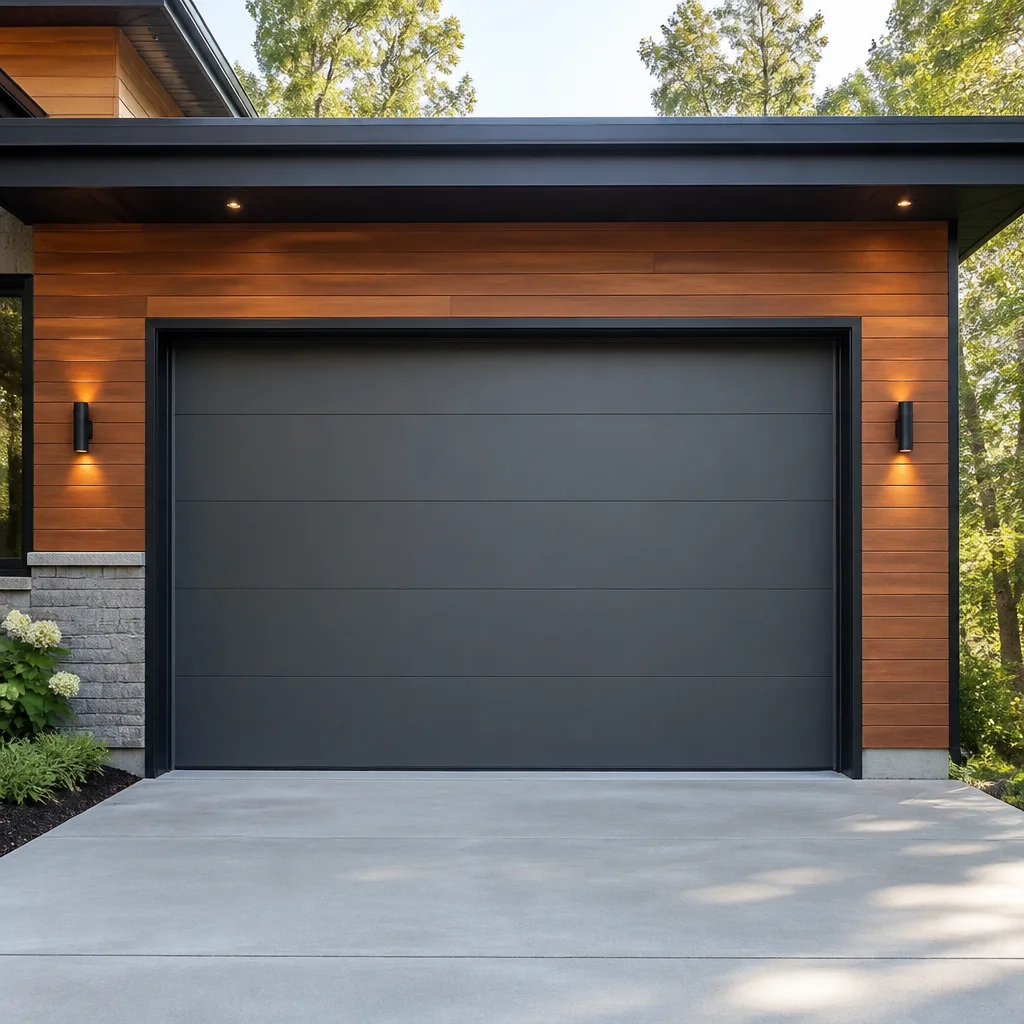 Modern flush
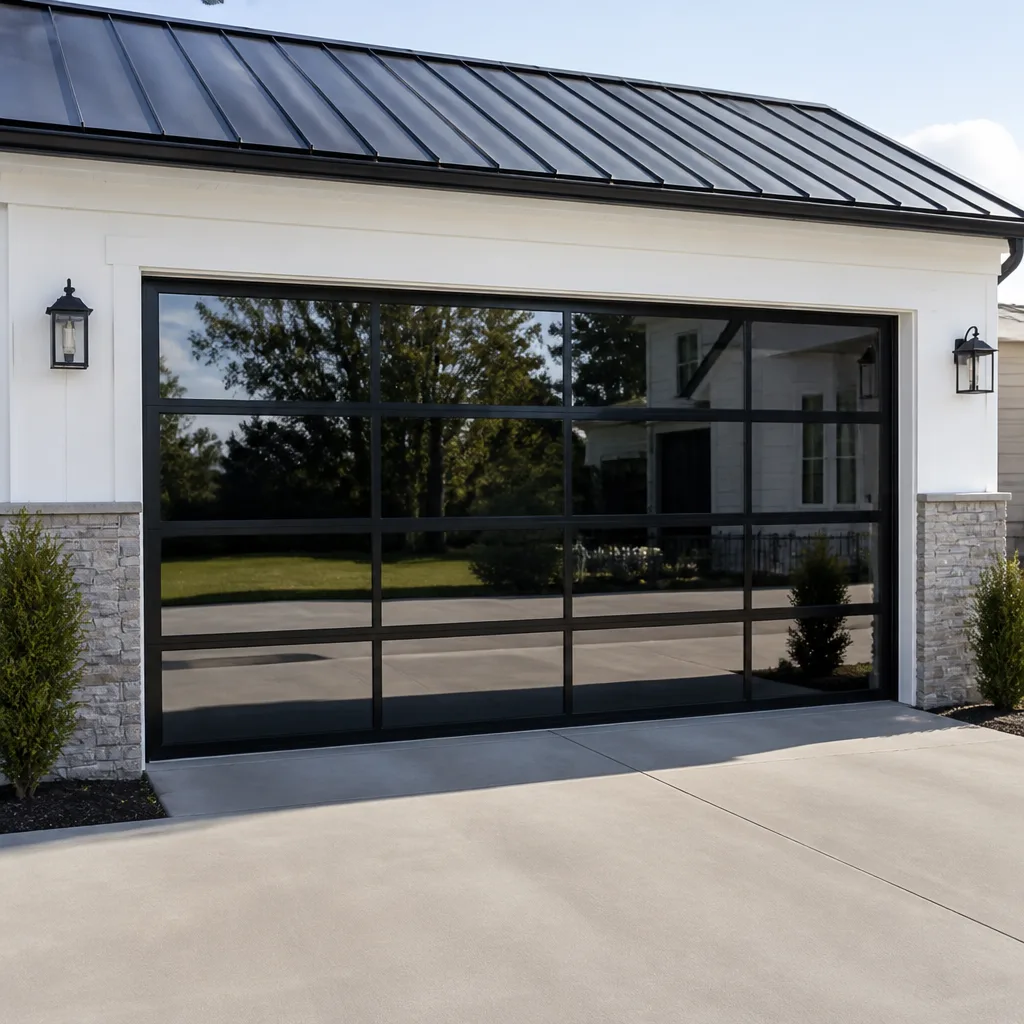 Full-view glass
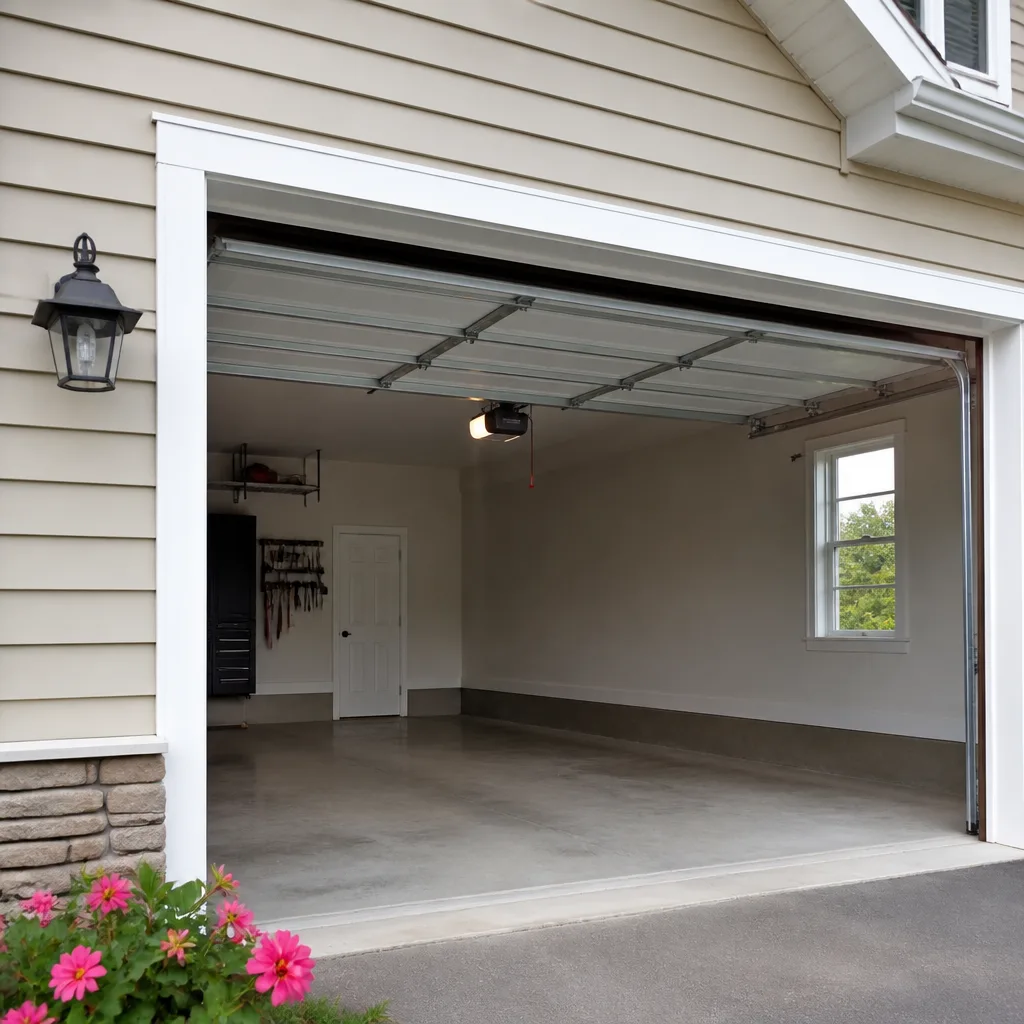 LiftMaster openers
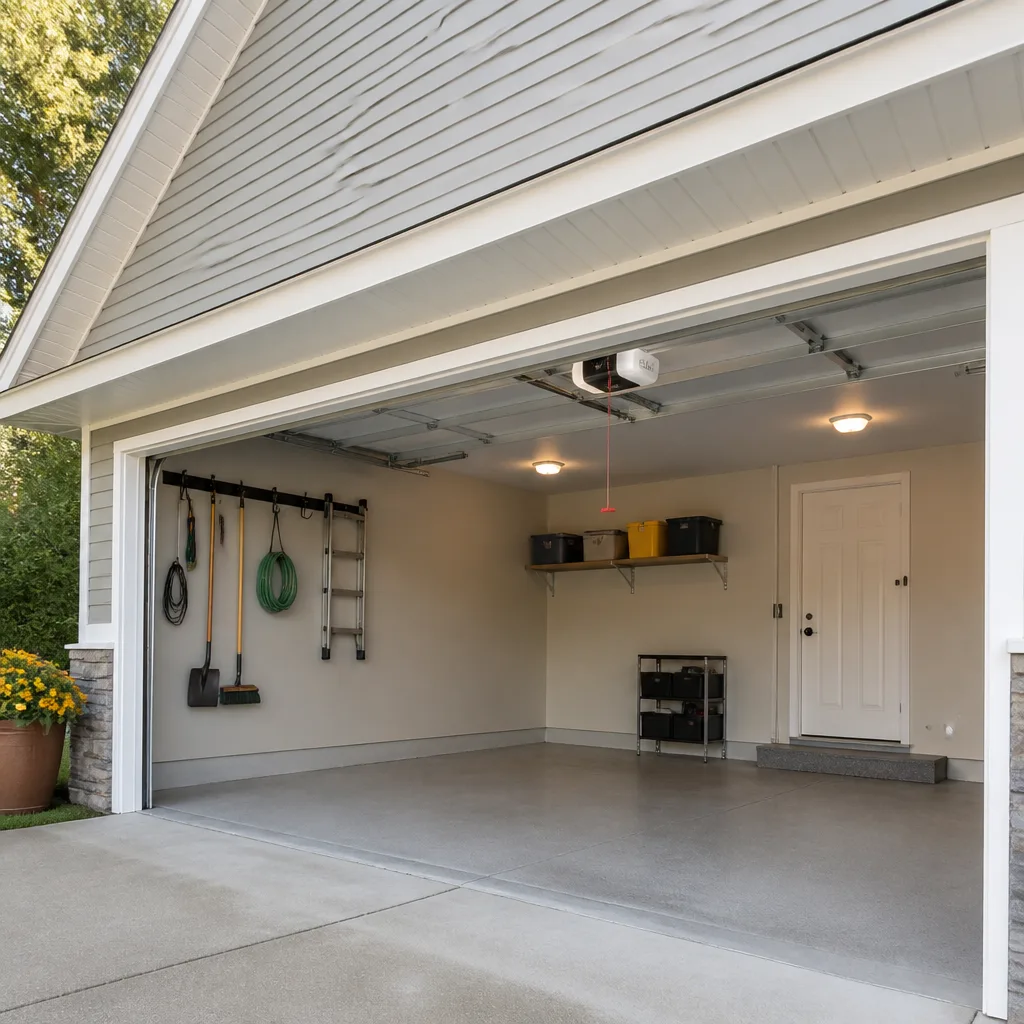 Chamberlain openers
Full 25-point door and opener safety check with every visit - springs, cables, rollers, tracks, and your LiftMaster or Chamberlain opener included
You get a price before we start. It does not change when the truck arrives.
Get your free estimateGarage Door Repair Maintenance Checklist for Enterprise Homeowners
Most garage door maintenance checklists floating around the internet were written for a Midwest four-season climate or a damp coastal town. Follow one of those in Enterprise and you can do real damage. The lubrication advice alone is a trap: most standard garage door lubricants thin out above 100°F, so the “monthly oiling” that protects a door in Portland can strip lubricant off your springs and rollers in the middle of a Las Vegas Valley July. What follows is a checklist built for the heat, the caliche dust, and the hard water that actually wear out doors in Enterprise. You’ll learn what to check, what you’re looking for, and why it fails here specifically.
Quick Answer
A garage door in Enterprise needs inspection every six months and lubrication every two to three months during the hot season, using a high-temp product that holds viscosity above 110°F. The three biggest local failure drivers are petroleum-based lubricants thinning in the heat, caliche dust packing into bottom seals and tracks, and hard-water mineral scale building on springs and rollers. Springs, cables, and tension hardware are never a DIY job.
Styles & brands we work with
- Raised-panel steel
- Carriage house
- Modern flush
- Full-view glass
- LiftMaster openers
- Chamberlain openers
Table of Contents
- Desert Lubrication: What Holds Up Above 110°F
- Caliche Dust: The Invisible Wear on Seals and Tracks
- Hard Water Mineral Buildup on Springs and Rollers
- Thermal Expansion: Reading Gaps in July and January
- The Safety Components You Should Actually Test
- Brand-Specific Maintenance Quirks in Enterprise
- Your Six-Month Enterprise Maintenance Schedule
- Common Mistakes to Avoid
Desert Lubrication: What Holds Up Above 110°F
The single most common maintenance error we see in Enterprise is applying a light general-purpose spray lubricant to torsion springs, rollers, and hinges because a national checklist told the homeowner to oil the door monthly. Those products are usually petroleum-based and designed for moderate temperatures. Once the garage interior climbs past 100°F, the base oil thins, migrates off the metal, and leaves moving parts running drier than if you’d left them alone. You’re stripping your own hardware every time you spray.
What holds up here is a high-temp lithium grease or a silicone-based lubricant rated to hold viscosity well above 110°F. The label matters more than the brand. Look for a stated temperature range on the product, not just the word “garage door” on the can.
Where to apply and how often
- Every two to three months during the hot season: torsion springs, the bearing plates, and the hinge pivot points. A light coating, not a drenching. Excess grease attracts dust, which we’ll cover next.
- Every three to four months: the roller stems and the track where the rollers ride. Rollers get lightly greased, not the whole track surface.
- Once or twice a year: the opener rail and the opener’s drive screw or belt path, using whatever the opener manufacturer specifies. For most LiftMaster and Chamberlain systems, that’s a light grease on the rail and nothing on the sealed gearbox.
- Never: the inside of the track itself, and never WD-40 as a garage door lubricant. It’s a solvent, not a grease, and it will strip whatever protection is already there.
The reason this matters more in Enterprise than elsewhere is simple arithmetic. A door in a mild climate might see a handful of days above 100°F per year. A door here sees weeks of them, and the garage, which has no air conditioning in most homes, runs hotter than the outside air. Every summer day is a stress test of whatever you put on that spring.
Caliche Dust: The Invisible Wear on Seals and Tracks
Las Vegas Valley wind doesn’t just drop dust on your driveway. Caliche is a calcium carbonate soil layer common throughout this part of Nevada, and when it breaks down into airborne fines, it’s fine enough to get past a poorly seated bottom seal and abrasive enough to wear metal. A coastal maintenance checklist talks about salt and moisture. Ours has to talk about grit.
The failure pattern we see most often: the bottom rubber seal develops small gaps at the corners or along the floor line, caliche fines blow in, and over a couple of seasons that dust works its way into the bottom bracket, the lower hinges, and the lower track. Those components wear faster because the abrasive dust sits in the pivot and acts like fine sandpaper every time the door cycles.
What to check for caliche intrusion
- Run a hand along the bottom seal and look for daylight showing through at the corners, especially where the door meets an uneven garage floor.
- Wipe a clean white cloth along the lower track and the lower hinges. A gritty, sandy residue means dust is getting in and needs to be cleaned out and re-lubricated.
- Listen for a grinding or scraping sound in the first 12 inches of door travel. That’s usually the bottom roller or bracket telling you it’s picked up grit.
- Inspect the bottom bracket where the lift cable attaches. A caliche-dusted bracket is a tell that the seal needs attention.
The fix is straightforward. Clean the lower track with a dry brush and a damp rag, not a lubricant, then re-lubricate the hinges and roller stems only. If the bottom seal is torn or compressed at the floor, it should be replaced. Seal replacement is a job a homeowner can schedule alongside routine garage door repair, since most companies will handle a worn seal while they’re already on-site for something else.
Hard Water Mineral Buildup on Springs and Rollers
Enterprise water is hard, and hard water finds its way onto garage door hardware in ways most checklists never mention. Sprinkler overspray, a hose sprayed toward the door, or even condensation on a cool morning can deposit calcium and magnesium on the springs, bearing plates, and roller stems. When that mineral film dries, it hardens into a chalky scale that traps moisture underneath and accelerates corrosion.
The twist is that the same summer heat that thins petroleum lubricants also speeds up mineral deposition: water evaporates faster, and the minerals it carried stay behind. A roller that gets a light misting from a nearby sprinkler twice a week can develop visible scale within a season in Enterprise.
Where scale hides and what to do
- Torsion springs: the coil surface should look evenly oiled, not chalky white in patches. Chalky patches are where mineral scale is forming.
- Bearing plates and end plates: these are at the top of the door and rarely get attention. Wipe them with a dry cloth annually, then apply a film of high-temp grease.
- Rollers and roller stems: the most common spot for scale on the door itself. Replace rather than fight a heavily scaled roller.
- Bottom brackets and lower hinges: hard water accumulates here if the bottom seal lets moisture in.
Routine cleanup is simple: dry wipe, then a fresh application of high-temp grease. On the spring itself, never try to remove scale or rust with a wire brush or abrasive pad unless a trained technician is doing the work. You do not want to be reaching into the torsion assembly.
Thermal Expansion: Reading Gaps in July and January
A garage door is a large metal panel assembly hanging in a frame that expands and contracts with temperature. Enterprise has a wide swing between an August afternoon and a January morning, and that swing moves the door and the frame in different directions. A door that opens and closes cleanly in January can bind in July, and vice versa.
The check is to observe the door’s alignment in two seasons. In peak summer, look at the gap between the door panels at the hinges and along the edges of the door. A visible gap that wasn’t there a few months earlier is a sign the frame or the panel has moved. Do the same check on a January morning, and compare.
What a seasonal alignment inspection looks for
- Panel alignment: stand inside the garage and look up at the door edges. The gap between each panel and the frame should be roughly consistent side to side.
- Hinge gaps: small gaps at the hinges are normal. A gap that’s opening wider than the others suggests a panel has shifted.
- Track alignment: the vertical tracks should run parallel to the door edge. Watch for a track that’s bowed outward in summer or inward in winter.
- Weatherstripping seal: the trim on the outside of the frame should sit flush. If it’s peeling away in summer, that’s a sign the frame or trim is moving.
Frame warp is not something to fix with a hammer and a hope. If you see a real change, the door’s balance and track alignment should be checked by a technician. A door that’s binding because of frame movement will eventually put stress on the opener, and that’s a costly chain reaction to stop early.
The Safety Components You Should Actually Test
Every garage door has two safety systems that need testing on a schedule: the photo-eye safety sensors near the floor and the mechanical auto-reverse on the opener. Both protect people and pets. Both fail silently.
How to test the photo-eye safety sensors
- Close the door using the wall control or remote.
- While the door is closing, pass a solid object (a rolled-up towel or a broom handle) through the beam path between the two sensors.
- The door should reverse immediately. If it continues to close, the sensors need service before the door is used again.
How to test the mechanical auto-reverse
- Place a 2-by-4 laid flat on the floor under the middle of the door, or use a rolled-up piece of cardboard about the same thickness.
- Close the door. It should reverse on contact with the object.
- If it doesn’t, stop using the automatic opener until a technician checks it.
A note about the safety boundary in this checklist: inspecting the door’s balance and testing the sensors is homeowner-safe. Anything involving the torsion spring, the lift cables, or the bottom bracket is not. Those parts hold enormous stored force. A trained technician handles them; a homeowner should never attempt to adjust or replace them.
Brand-Specific Maintenance Quirks in Enterprise
No single checklist covers every door, because different brands have different maintenance points and failure tendencies. Here are the quirks we see on the most common brand families installed in Enterprise homes.
LiftMaster openers
LiftMaster systems, including the Wi-Fi-connected MyQ-compatible models, generally want a light application of the manufacturer’s rail grease once or twice a year and nothing on the sealed gearbox. The most common local failure is a photo-eye that has drifted out of alignment after a summer of thermal expansion, or a sensor lens clouded by caliche dust. Wipe the lens with a dry cloth before assuming the opener is failing.
Clopay doors
Clopay steel doors with insulated panels can develop panel gap issues in the Enterprise heat if the hinges are not kept lubricated. A dry hinge at a panel joint gets a small gap that grows. These are a routine check.
Wayne Dalton doors
Wayne Dalton models with the TorqueMaster spring system are common enough in this area that they deserve a mention: the enclosed spring design means homeowner lubrication is not needed on the spring, and the routine check is to listen for unusual noise or feel for a door that lifts unevenly. Any adjustment is technician work.
Craftsman openers
Craftsman systems, especially the older belt and chain drives, are less sensitive to temperature but can develop a stretched chain or a worn trolley after years of thermal cycling. A light rail grease and a visual check of the chain tension is enough for a homeowner. Tension adjustments on a chain-driven system are a technician task.
Because we work across the brands installed in this area, including Amarr, Raynor, and the others you’ll see on doors around Enterprise, we can diagnose the door and the opener in the same visit rather than sending you to a second company for the brand they don’t service.
Your Six-Month Enterprise Maintenance Schedule
Here’s a maintenance rhythm that fits the local climate. Run it in spring, before the heat sets in, and again in the fall, before the thermal swing starts working against the door.
Spring inspection (before the hot season)
- Wipe down all moving parts: springs, hinges, roller stems, and bearing plates. Remove any dust and mineral film before re-lubricating.
- Apply high-temp lithium grease to springs and hinges. Re-lubricate the rollers lightly.
- Test the photo-eye sensors and the mechanical auto-reverse.
- Check the bottom seal for gaps and the lower track for caliche dust. Clean both.
- Listen for unusual noises in the first 12 inches of travel, and watch for uneven door lift.
- Inspect the opener rail and grease the drive path.
Fall inspection (before the thermal swing)
- Check panel and hinge gaps and compare them with what you saw in summer.
- Re-lubricate the springs and hinges with high-temp product.
- Test photo-eye sensors and auto-reverse again.
- Wipe down the lower track and hinges for caliche dust buildup.
- Look for chalky mineral film on springs and roller stems and clean it off.
- Check the opener’s rail, belt, or chain and note anything that feels or sounds different from the spring inspection.
Routine maintenance is what keeps a door out of the repair category. Sometimes it doesn’t, and a spring or an opener needs attention anyway. When it does, our garage door opener repair covers the drive side and our repair service covers the door side, so a single visit handles both.
Common Mistakes to Avoid
- Using a general-purpose spray lubricant on the springs. Most of those products are petroleum-based and thin out above 100°F, which turns your lubrication routine into a slow strip-down of the hardware. Use a high-temp lithium grease or a silicone product rated above 110°F.
- Lubricating the inside of the track. Track surfaces should stay clean and dry. Grease in the track grabs caliche dust and turns it into an abrasive paste that wears the rollers.
- Skipping the bottom seal inspection. A small gap at the corners is the main entry point for caliche fines. Once the dust gets in, it wears the bottom bracket, hinges, and lower track.
- Assuming surface chalk on a spring is just cosmetic. In Enterprise hardness, chalky patches are mineral scale. Left alone, it traps moisture and speeds corrosion on the spring.
- Checking door alignment only once a year. A door that measures clean in January can bind in July. Compare against the other season to catch frame movement early.
- Ignoring a photo-eye that looks fine. Sensors drift out of alignment with thermal expansion and cloud up with dust. Testing them is a two-minute job and it’s the one that protects kids and pets.
- Adjusting torsion springs, cables, or the bottom bracket as a DIY project. Those components hold dangerous stored force. Any work on them belongs with a trained technician, not in the maintenance checklist.
See the difference
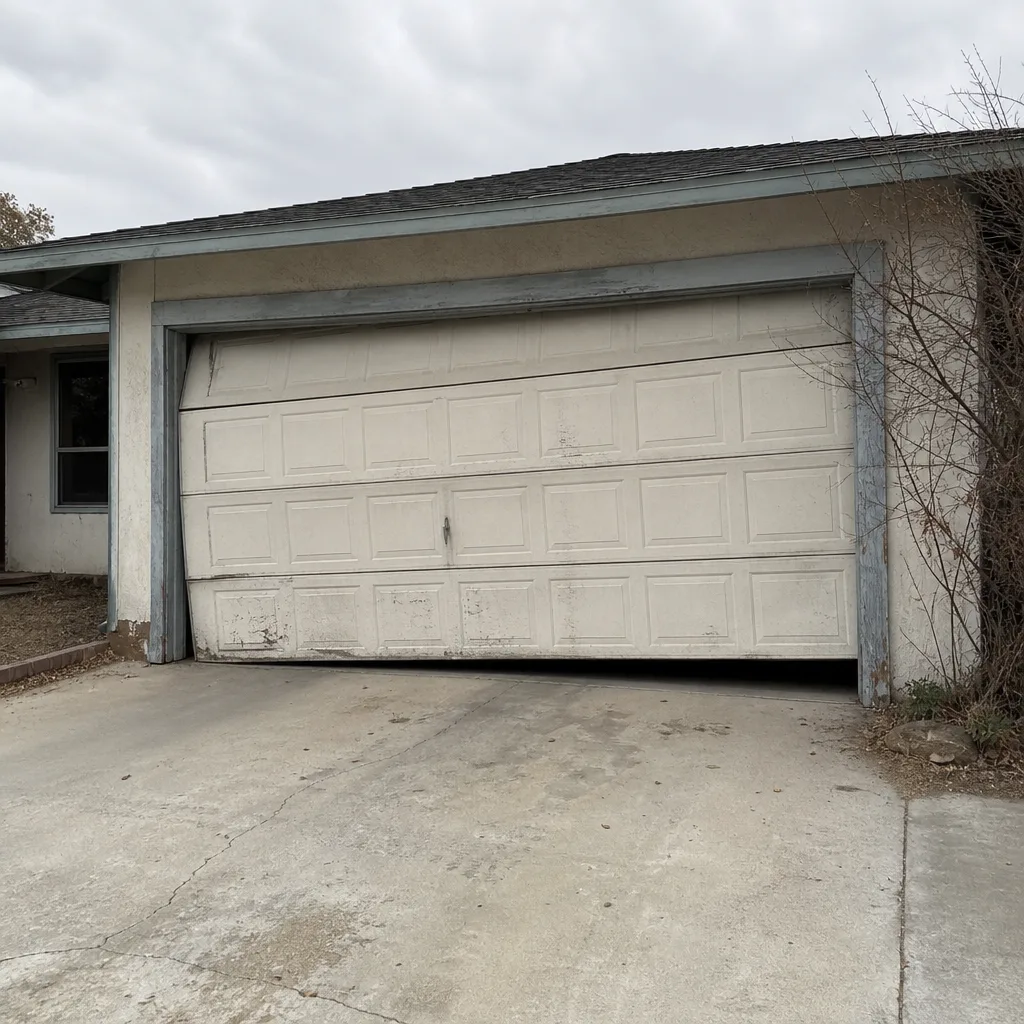 Before
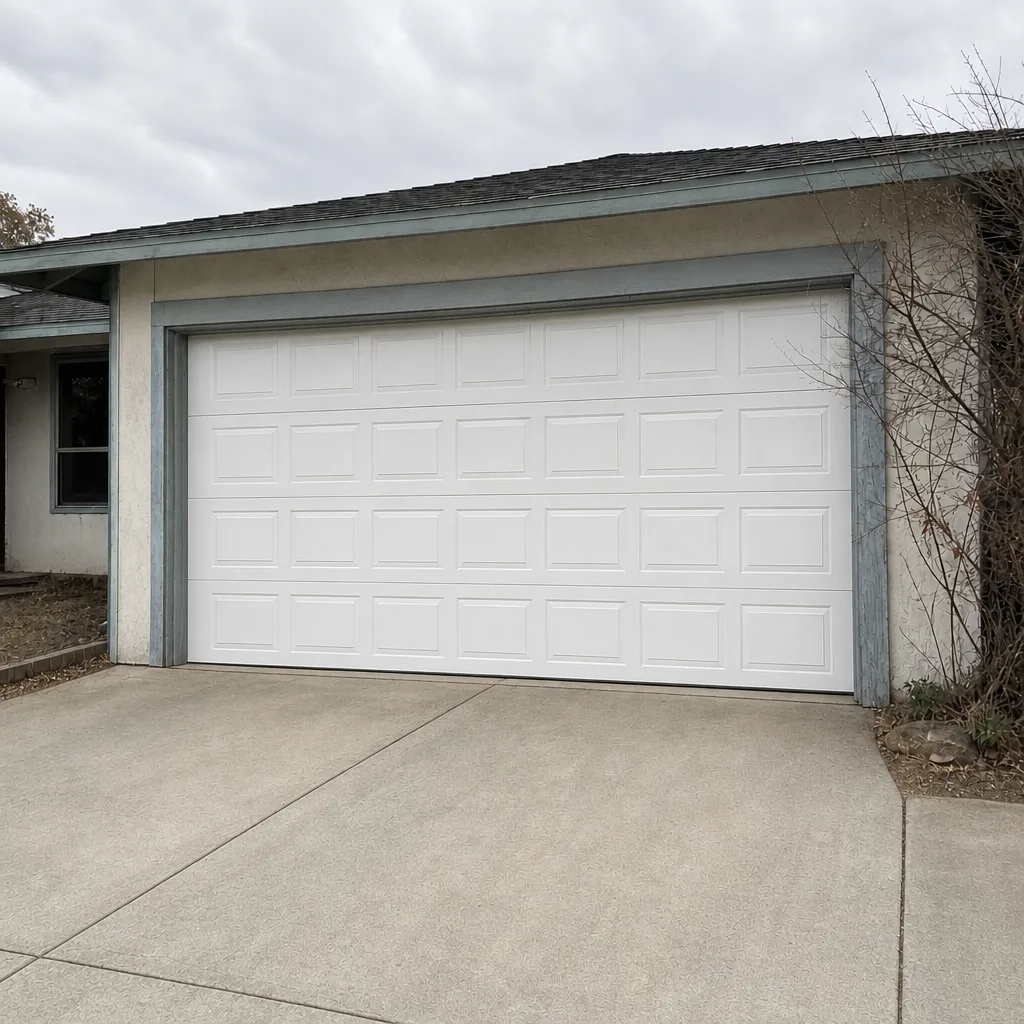 After
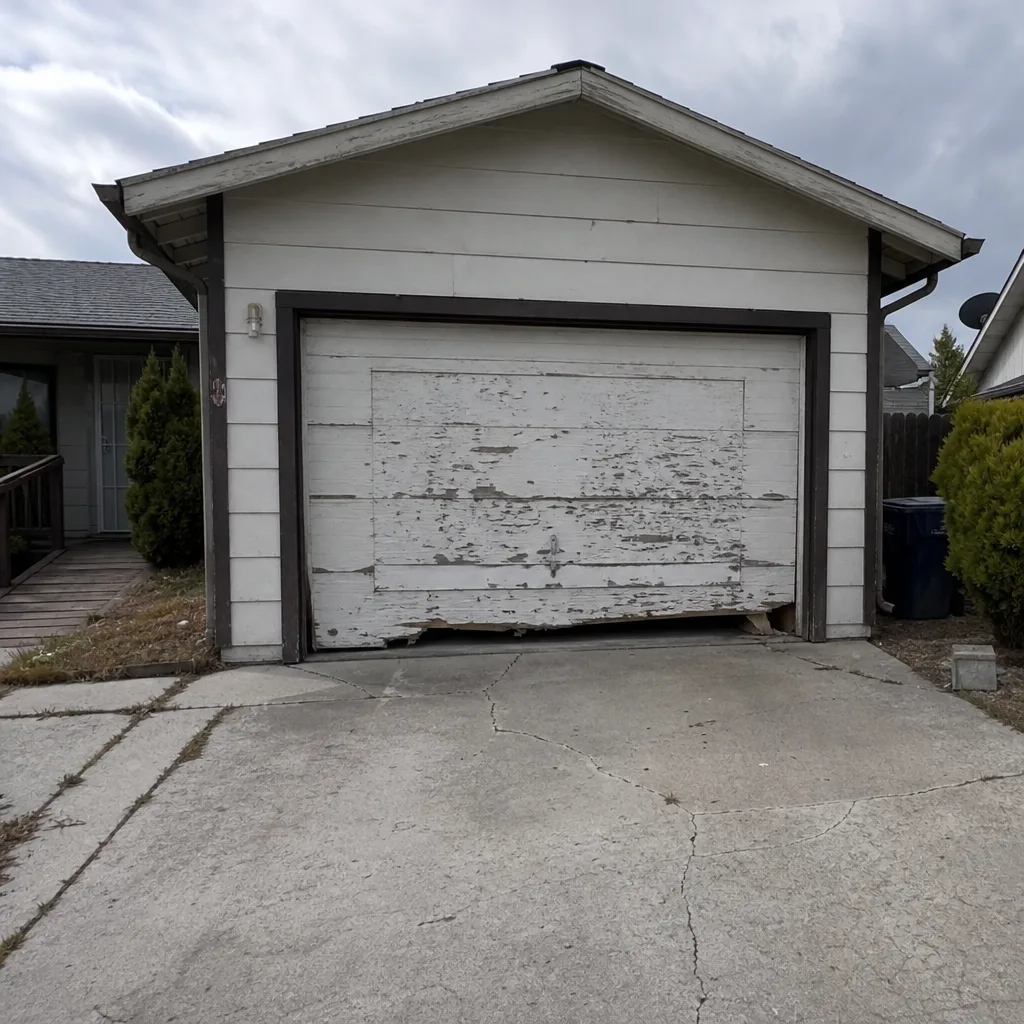 Before
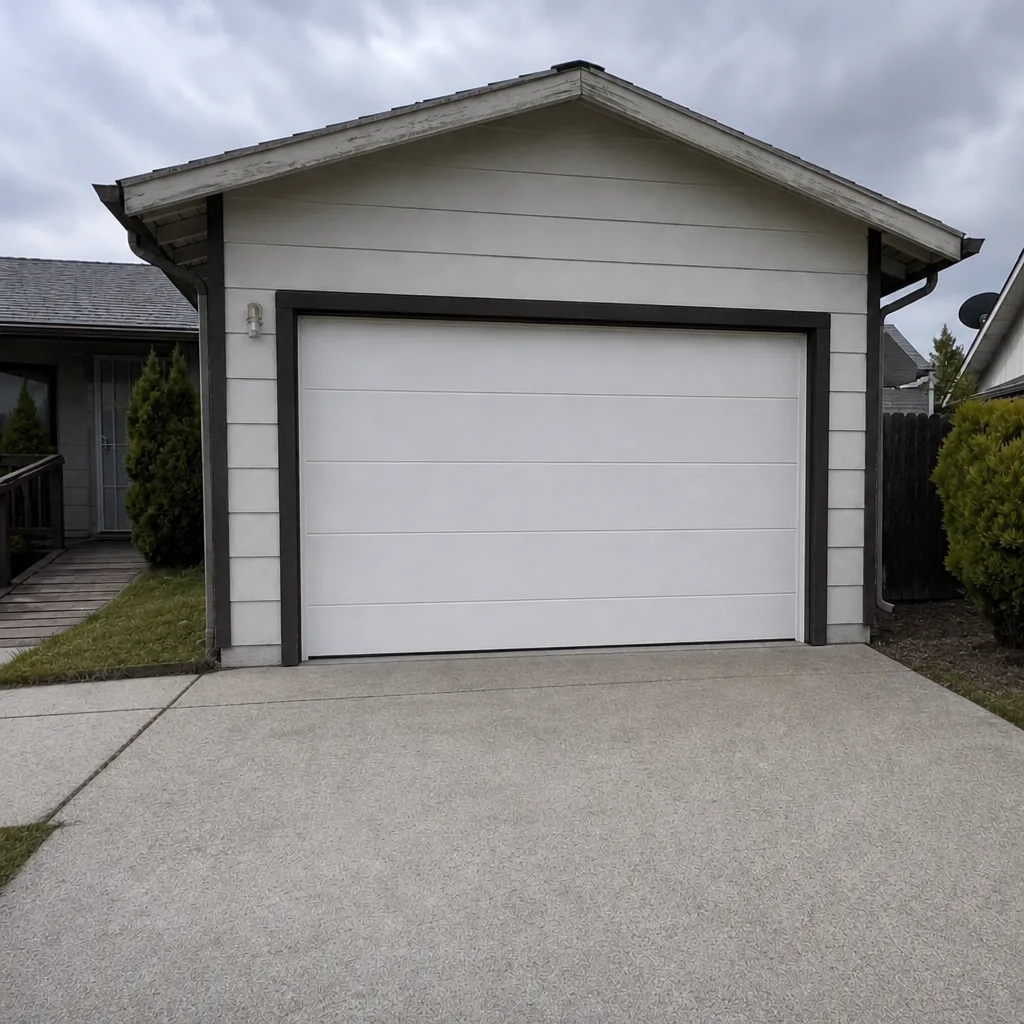 After
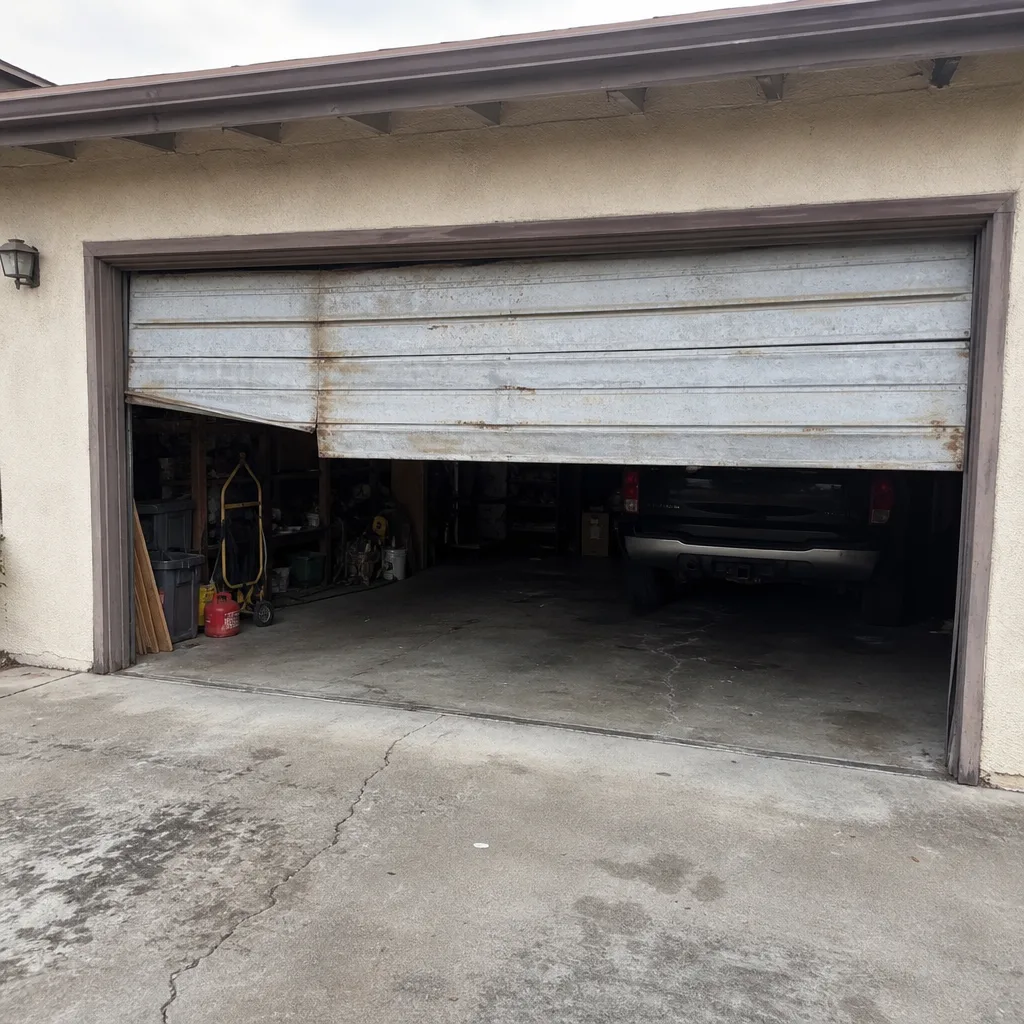 Before
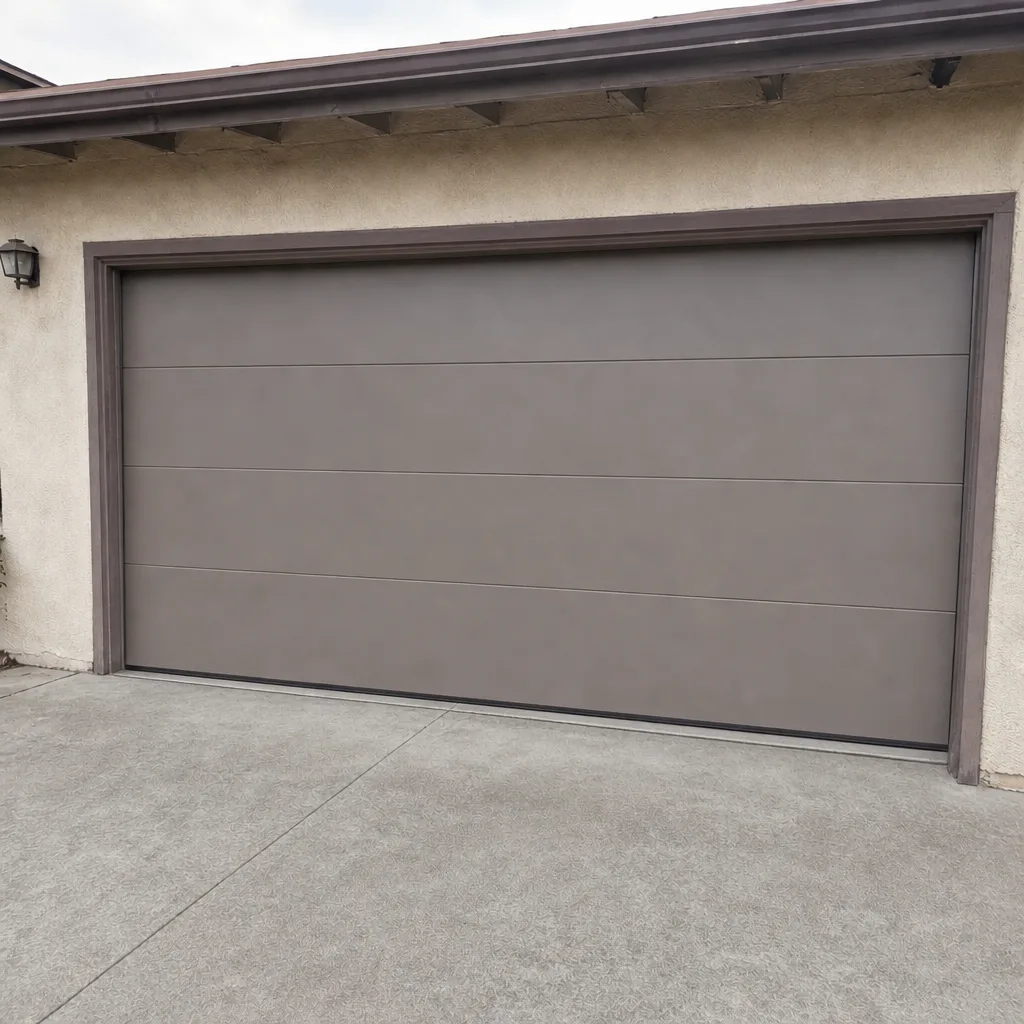 After
When to Call a Professional
Some maintenance tasks are homeowner work: lubricant, dust, sensor testing, and visual inspection. Others are not, and there are also situations where the door has already crossed from maintenance into repair. Call a professional if:
- The door lifts unevenly or feels heavy, which usually points to a spring under load or a balance problem.
- You hear a loud snap, the door stops halfway, or the spring shows a visible gap in the coil. That’s a broken spring and must be handled by a technician.
- The door reverses on its own, closes unevenly, or the opener runs without moving the door.
- A cable looks loose, frayed, or off its drum.
- You see a panel or track that has visibly moved since your last seasonal inspection.
Northwind Garage Door Repair offers free estimates in Enterprise. Call (888) 915-1004 and we’ll send a technician out to diagnose whether it’s the door or the opener, and give you a written price before any work starts. We answer 24/7, and fast dispatch from 7am to 7pm, Sunday through Friday, gets a technician out to most Enterprise homes the same day for repair work. Installation and full replacement are scheduled after a free measure.
If you’re in a nearby part of the valley and need the same service, our Enterprise page covers the area in plain terms, and our main Northwind Garage Door Repair page has the full list of what we handle. We work across the major brands installed in homes here, from Amarr and Raynor to the LiftMaster and Craftsman systems that show up most often on opener repair calls.
Frequently Asked Questions
Every two to three months during the hot season, and every three to four months the rest of the year, using a high-temp lithium grease or a silicone-based lubricant rated to hold viscosity above 110°F. Standard petroleum-based lubricants thin out in Enterprise heat and can actually strip protection off the springs. Call (888) 915-1004 if you’re not sure what’s on the door now; we can tell you what to use and what to skip.
Summer noise in Enterprise is usually one of three things: lubricant that has thinned with heat, caliche dust packed into the lower track and hinges, or thermal expansion of the door and frame putting slight stress on the alignment. A spring that sounds different than it did in January is worth a look. If the noise started suddenly, call (888) 915-1004 for a free estimate.
A maintenance visit covers lubrication, dust and mineral cleanup, alignment checks, and safety testing. A repair visit covers a specific failed part, like a broken spring, a worn roller, a frayed cable, or an opener that won’t respond. Most maintenance items are homeowner work; most repairs are technician work. We can schedule a maintenance visit or a repair visit on the same call. Call (888) 915-1004.
No. Torsion springs, lift cables, and the bottom bracket hold dangerous stored force, and a slip can cause serious injury. Lubrication of the spring surface is fine for a homeowner, but any adjustment, replacement, or tensioning is technician work. A trained technician should handle all of it.
Yes. We work across the brands most commonly installed in Northwind service areas, including LiftMaster, Chamberlain, Genie, Clopay, Amarr, Wayne Dalton, Craftsman, and Raynor. That means we can diagnose the door and the opener in the same visit. Call (888) 915-1004 for a free estimate.
No. Pricing is set per job by the written estimate, and it’s quoted and agreed before any work starts. The price doesn’t change because of the heat or the day it’s scheduled. Call (888) 915-1004 for a written price.
The Bottom Line
A garage door maintenance checklist written for a mild climate will wear out your door faster in Enterprise than no checklist at all. The three levers that matter here are temperature, caliche dust, and hard water. Use a high-temp lubricant that holds viscosity above 110°F, keep the lower track and seals clean of grit, and clean mineral scale off the springs and rollers before it traps moisture. Run the spring and fall inspections on schedule, test your photo-eye sensors and auto-reverse, and check panel and track alignment across both a July afternoon and a January morning. Homeowner work stops at the torsion spring, cables, and bottom bracket; those belong to a technician. And when the season catches up with the door, the goal is the same as always: one call, one crew, a diagnosis and a written price before any work starts.
If a maintenance check turns up something that needs repair, or if your door has already told you it’s done being patient, call us. Northwind Garage Door Repair has served Enterprise since 2018, and we work across the major door and opener brands installed here. Call (888) 915-1004. We answer 24/7. Fast dispatch from 7am to 7pm, Sunday through Friday. Estimates are free.
Written by the team at Northwind Garage Door Repair, serving Enterprise since 2018.