
Last updated November 14, 2026
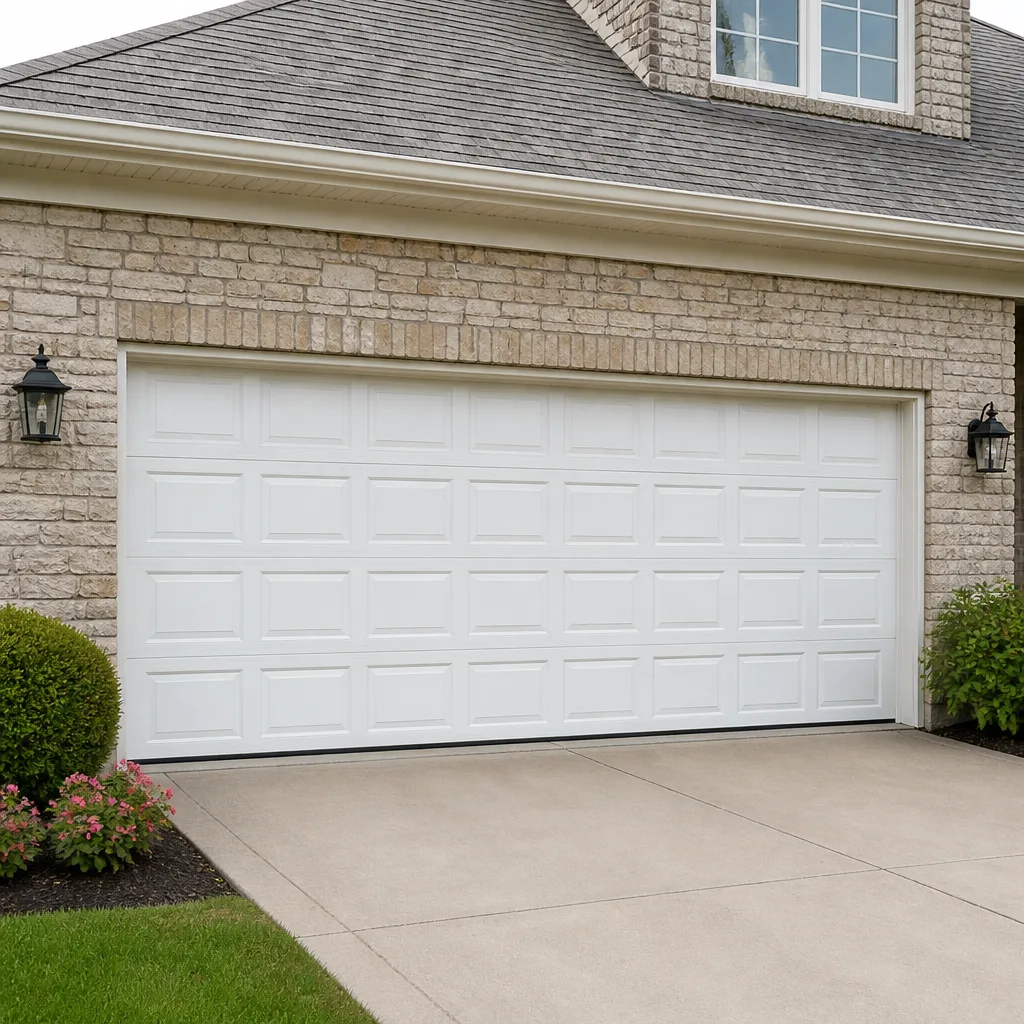 Raised-panel steel
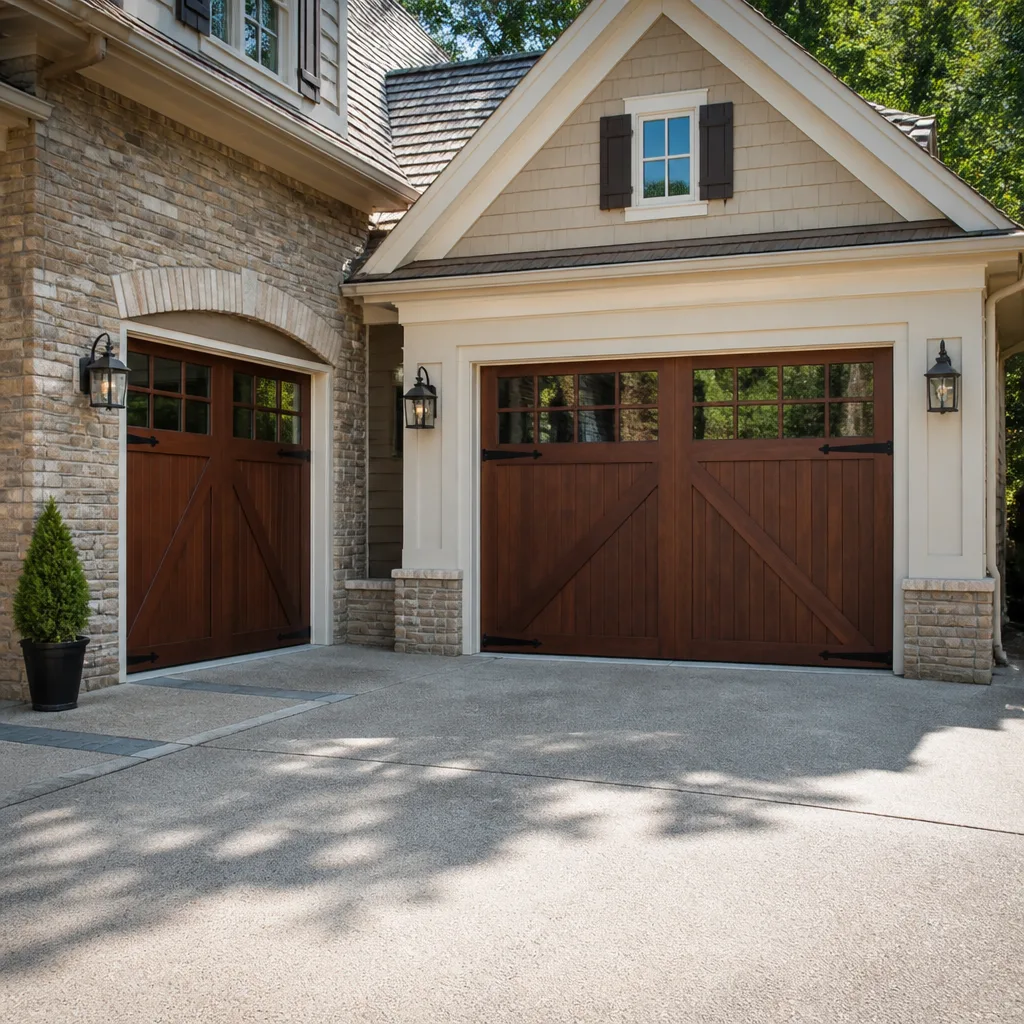 Carriage house
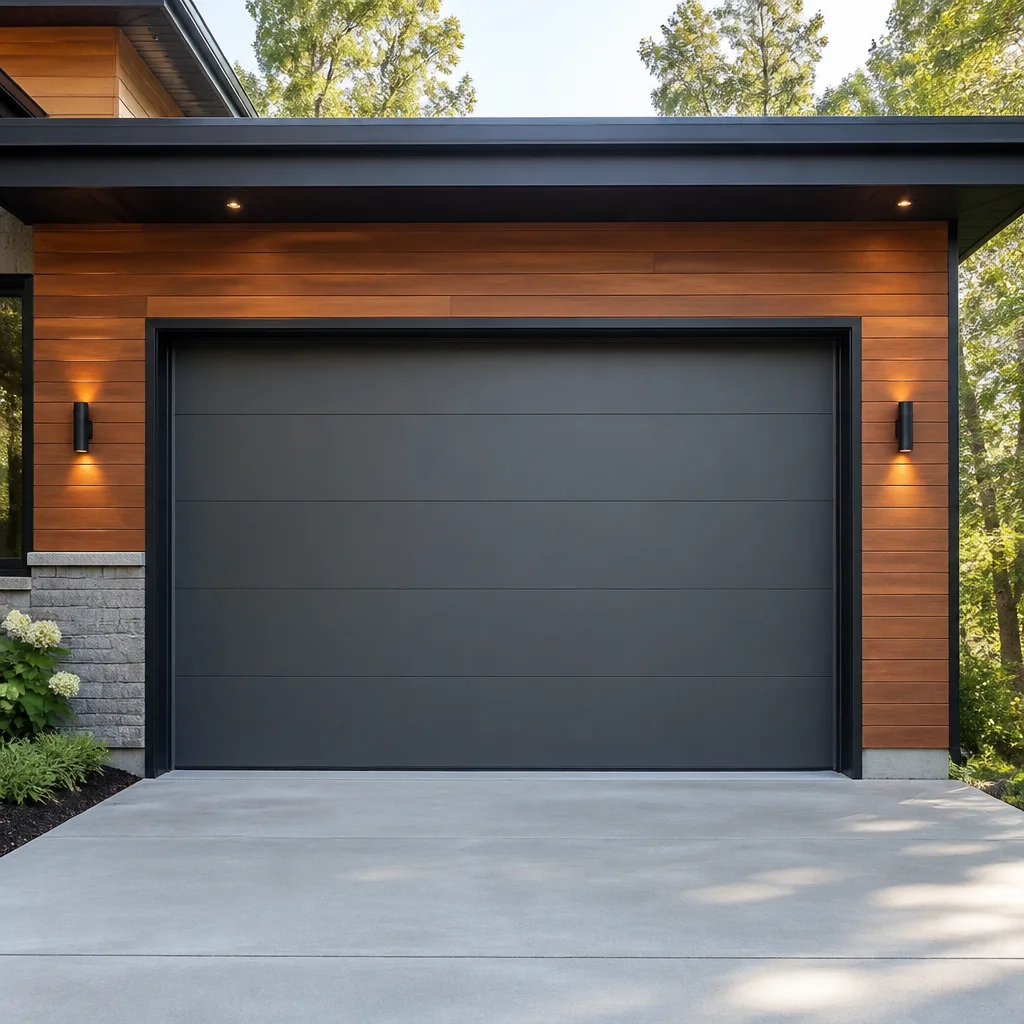 Modern flush
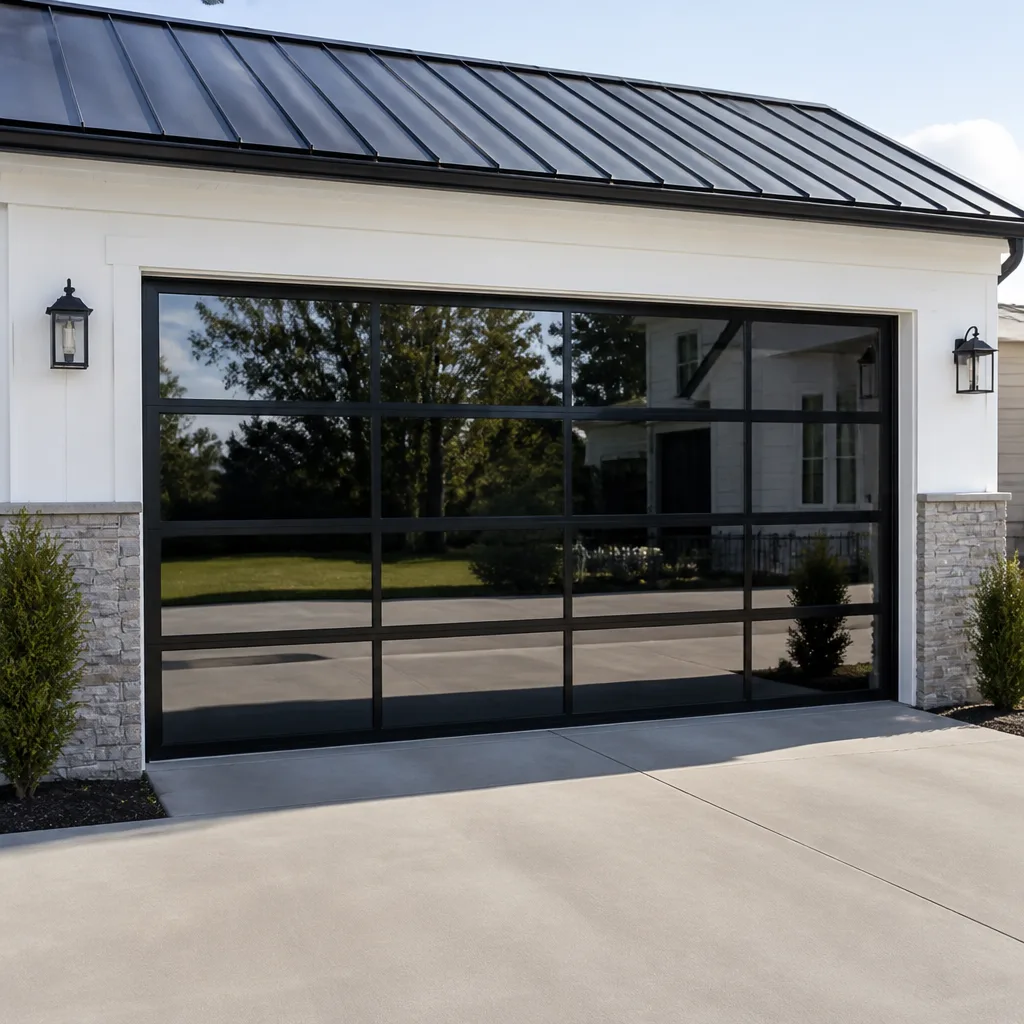 Full-view glass
 LiftMaster openers
 Chamberlain openers
Full 25-point door and opener safety check with every visit - springs, cables, rollers, tracks, and your LiftMaster or Chamberlain opener included
You get a price before we start. It does not change when the truck arrives.
Get your free estimateThe Complete Guide to Garage Doors in Enterprise
Enterprise grew faster than almost any unincorporated community in Nevada, and that growth left a mark on every garage door in town. Hundreds of thousands of doors went up during tract-home buildouts, and not all of them were installed to the standard you’d assume from a newer house. That matters whether you’re buying your first home here, chasing a door that won’t close, or planning to sell in a few years. This guide walks through what Enterprise homeowners actually face: how unincorporated Clark County permitting differs from Las Vegas proper, why HOA color rules turn a paint chip into a compliance issue, what desert heat does to springs and panels, and how to handle the mixed-brand reality of phased neighborhoods.
Quick Answer
Garage doors in Enterprise need to be spec’d for extreme desert heat, permitted differently than doors in Las Vegas proper, and chosen with HOA approval in mind before you buy anything. Most repairs run a few hundred dollars, replacements depend on door size and material, and the final number always comes from a written estimate. The biggest local pitfalls are ignored thermal specs, unapproved color changes, and assuming one brand covers every door in a phased neighborhood.
Styles & brands we work with
- Raised-panel steel
- Carriage house
- Modern flush
- Full-view glass
- LiftMaster openers
- Chamberlain openers
Table of Contents
- How Does Clark County’s Unincorporated Status Affect Your Garage Door?
- Why HOA Rules in Enterprise Make Color and Material a Code Question
- What Desert Heat Does to a Garage Door (And the Specs That Matter)
- Which Door Styles Dominate Enterprise Housing Stock
- The Mixed-Brand Reality of Phased Neighborhoods
- Every Garage Door Decision, From First Purchase to Year Ten
- When the Problem Is the Opener, Not the Door
How Does Clark County’s Unincorporated Status Affect Your Garage Door?
Enterprise sits in unincorporated Clark County, not inside Las Vegas city limits, and that single fact changes who you call for a permit and who inspects the work. Many homeowners assume “Las Vegas area” means Las Vegas rules. It doesn’t. When you replace a door or change structural elements of the opening, ask Clark County’s building department what applies to your address before work begins, not after. Permit requirements vary by the scope of the job, and getting a straight answer up front saves you a headache at resale or during a future inspection.
In our experience, the confusion usually starts when a homeowner gets a quote from a contractor who works mostly inside city limits and assumes the same process applies out here. It doesn’t always. The safest rule is simple: if your job involves anything beyond swapping a spring or opener, call the county and ask. Ten minutes on the phone beats discovering a permit problem years later when you’re trying to sell.
Some practical steps for anything permit-related:
- Identify whether your address falls under Clark County jurisdiction or another authority.
- Call the county building department and describe the scope in plain terms: full replacement, panel swap, opener only, or structural change.
- Ask specifically whether the job needs a permit and whether an inspection is required after.
- Get the answer in writing if you can, and keep it with your home records.
For routine work like a spring, cable, or opener fix, permits typically don’t come into play. For a full door replacement, the rules tighten. Our garage door repair team can tell you which bucket your job falls into on the first visit.
Why HOA Rules in Enterprise Make Color and Material a Code Question
Enterprise has one of the densest concentrations of HOAs in the Las Vegas Valley. That turns what looks like a paint decision into a compliance decision. If your community’s architectural review requires a specific color or panel style, and you install something that doesn’t match, you can end up repainting or reordering at your own cost. We’ve seen this trip up homeowners who assumed “white is white” or “the same style as before” without pulling out their HOA documents first.
Before you commit to a replacement door or even a repaint, run through this checklist:
- Pull your CC&Rs and any architectural guidelines from your HOA portal.
- Look for approved color lists and panel profile restrictions, not just general style notes.
- Ask whether an architectural review application is required and how long approval takes.
- Get written approval before ordering, not after installation.
- Keep the approval and the door spec sheet with your closing documents.
When in doubt, get your HOA’s sign-off in writing before the order is placed. That applies to color, panel style, window inserts, and any material change. A darker bronze door might look great against a desert yard, but if the HOA only approves a specific tone, the difference is on you. This is where Northwind Garage Door Repair can help: we’ll walk through the door options before you commit, so you’re choosing from what’s actually approvable in your community.
What Desert Heat Does to a Garage Door (And the Specs That Matter)
Ambient temperatures in Enterprise regularly top 110°F in summer, and the inside of a west-facing garage can climb well above that. Doors built for milder climates fail faster here. Springs fatigue earlier, weather seals crack, and some lower-grade steel panels will show surface damage well before their rated lifespan. That’s not marketing talk. It’s a spec problem, and it’s the single most overlooked factor when homeowners pick a replacement door.
The thermal specs that actually matter in this climate:
- Insulation value: Look at the R-value of the panel. For an attached garage where you care about heat transfer into the house, higher is better. For a detached or unconditioned garage, lower-rated doors may be fine.
- Panel construction: Steel skins over polyurethane or polystyrene cores hold up better than uninsulated or honeycomb-filled panels.
- Thermal break: A thermal break between the inner and outer steel faces reduces heat transfer and condensation issues.
- Weatherstripping material: Vinyl and EPDM seals outlast low-grade foam, which dries out and cracks quickly in desert conditions.
- Color and finish: Lighter finishes reflect heat. Factory finishes hold up longer than field-applied paint.
If your garage touches the house and you run an evaporative cooler or AC near it, insulation isn’t a luxury. It’s part of the envelope. If it’s a detached shop that only holds tools, a basic insulated steel door does the job. The mismatch to avoid is a budget door on an air-conditioned garage, or a top-spec panel on a storage structure that will never be heated. Choose based on how the space is used, not on what looks best on a showroom floor.
Which Door Styles Dominate Enterprise Housing Stock
Drive through Enterprise neighborhoods built over the last few decades and you’ll see the same handful of styles repeat. Raised-panel steel doors in white, almond, and sandstone dominate. Sectional doors with a row of decorative windows near the top are common in newer phases. Carriage-house style doors show up in the upscale pockets but are a minority. The uniformity isn’t an accident: tract builders used a small number of approved styles to speed up construction and satisfy HOA aesthetic guidelines across the development.
That matters for two reasons. First, matching a replacement door to the neighborhood is easier than you’d think if you start with what the builder installed. Second, resale value in Enterprise tends to reward a door that fits the community, not one that stands out. A flashy modern-style door in a neighborhood of raised-panel whites can hurt a listing more than help it. Buyers here are looking for consistency, and HOAs enforce it.
Which materials dominate:
- Steel: The overwhelming majority. Affordable, holds color well in desert conditions, and takes the raised-panel look that most neighborhoods expect.
- Aluminum: Full-view glass doors show up in newer or higher-end communities, especially where the front elevation has been upgraded.
- Wood and wood-composite: Rare. Some custom builds use them, but maintenance in this climate is significant.
If you’re replacing a door, ask which manufacturer supplied the rest of the street. Local installers who work this area know which brands show up in which phases. More on that below.
The Mixed-Brand Reality of Phased Neighborhoods
Enterprise wasn’t built all at once. Different phases of the same community were completed years apart, often by different builders, and often with different door and opener manufacturers. A single street can hold a Wayne Dalton door from one phase next to a Raynor or a Clopay from a later one. If you call a shop that only services one brand, you may get told “we don’t handle that” – which is exactly the situation our multi-brand focus is built for.
We service eight of the most widely installed garage door and opener brands in North America, including LiftMaster, Chamberlain, Genie, Clopay, Amarr, Wayne Dalton, Craftsman, and Raynor. That coverage matters for a few reasons:
- No brand left behind. If your door or opener is on that list, we can diagnose it without special-order delays.
- Same-visit diagnosis. When it’s unclear whether the door or the opener is failing, a single technician can check both in one trip.
- Legacy and modern alike. We handle current Wi-Fi smart openers (LiftMaster and Chamberlain lines) as well as older Craftsman and Genie drive systems that still run reliably.
- Brand-agnostic recommendation. We’re trained across competing manufacturers, so our advice is based on what the door actually needs, not on which brand we’re incentivized to push.
If your current repair company has told you they don’t service your brand, call and tell us what’s on the label. For a full look at the opener side of that conversation, see our garage door opener repair page.
Every Garage Door Decision, From First Purchase to Year Ten
The decisions you face as an Enterprise homeowner shift with time. Year one is about moving in and learning what you inherited. Year five is when most springs fail and openers start having trouble. Year ten is when you start thinking about a full replacement. Here’s the map most homeowners actually follow.
Year 1: Moving In and Understanding What You Have
- Find the manufacturer label on the door and the opener. Photograph both and keep the images.
- Locate any warranty paperwork the previous owner left. Transfer it if the manufacturer allows.
- Test the safety reverse feature (the door should reverse when it meets an obstruction) once a month.
- Lubricate hinges, rollers, and tracks with a garage-door-specific lubricant, not WD-40.
Years 2-6: Maintenance and First Repairs
Springs usually fail first, cables next, then rollers. Weather seals around the perimeter wear out faster here than most places because of heat and dust. If you hear a sharp bang from the garage, stop using the door. A snapped torsion spring will leave the door too heavy to lift safely by hand.
Years 7-10: Replace or Repair?
A door that’s still structurally sound after a decade of desert heat is usually worth repairing. Once you’re looking at panels with surface damage, a non-functioning opener, and a spring that’s already been replaced once, the math shifts toward replacement. Replacement also gives you a chance to upgrade insulation and pick an HOA-approved style before the door fails on its own schedule.
Year 10+: Replace
Replacement in Enterprise is best planned, not rushed. Doors are measured, ordered, and scheduled. That’s different from a repair, which can often happen the same day. If your door is on its last legs, get a measure scheduled a few weeks ahead so you can pick style and color without pressure.
When the Problem Is the Opener, Not the Door
Roughly half the service calls that sound like “my door is broken” turn out to be an opener issue. The door itself is fine, but the motor, drive gear, logic board, or safety sensor is failing. The most common phone descriptions we hear are “it hums but doesn’t move,” “the door goes up a foot and reverses,” and “the remotes stopped working.” Each of those points to a different part of the opener.
Here’s how to tell where the problem lives before you call:
- Door won’t move at all, opener silent: Check that the opener has power, then check the safety sensors at the base of the track. A misaligned sensor from a bumped trash can is the most common cause.
- Opener hums, door doesn’t move: Usually a stripped gear or a broken drive mechanism inside the opener. This is a technician job.
- Door reverses at the floor: A safety-reverse issue or a sensor alignment problem. Sometimes the door binds on one side, which trips the safety.
- Remote doesn’t work but the wall switch does: The remote, the battery, or the radio board inside the opener. Almost never the door itself.
- Door is louder than it used to be: Rollers, hinges, or a failing opener. Worth seeing in person to tell which.
If you’re on a LiftMaster or Chamberlain system and want smart-home integration, replacing the opener rather than repairing an old legacy unit may make more sense. If you’re running an older Craftsman chain-drive unit that’s still smooth and quiet, repair is usually the smarter call. Either way, the recommendation should follow what your hardware actually needs. If you’re near Enterprise and want the two checked together, a single visit can usually tell you which side is failing.
Common Mistakes to Avoid
- Ignoring your HOA before you buy. Ordering a door that doesn’t match the approved palette means repainting or reordering at your cost. Pull the architectural guidelines first, not after.
- Skipping the Clark County permit question. Assuming “Las Vegas rules” applies in unincorporated Enterprise can leave you with an unpermitted job. Call the county building department before any structural work.
- Choosing a door without looking at insulation. A west-facing garage on an air-conditioned house with an uninsulated door works against your cooling system all summer. Pick the R-value for the way the space is used.
- Buying a replacement door before you’ve had the spring checked. If your door feels heavy or won’t open, don’t assume the door is finished. A failing spring is a repair, not a replacement.
- Using a one-brand shop on a mixed-brand street. If your door is a Wayne Dalton and your opener is a LiftMaster, you want a technician who works both brands without sending you to a second contractor.
- Greasing the tracks. Tracks should stay clean and dry. Lubricant on the tracks attracts dust, which turns into grime that gums up the rollers.
- Assuming a same-brand part is always faster. Most parts are available, but a replacement door panel in a non-standard color or style is a special order. Planning ahead beats an urgent call.
See the difference
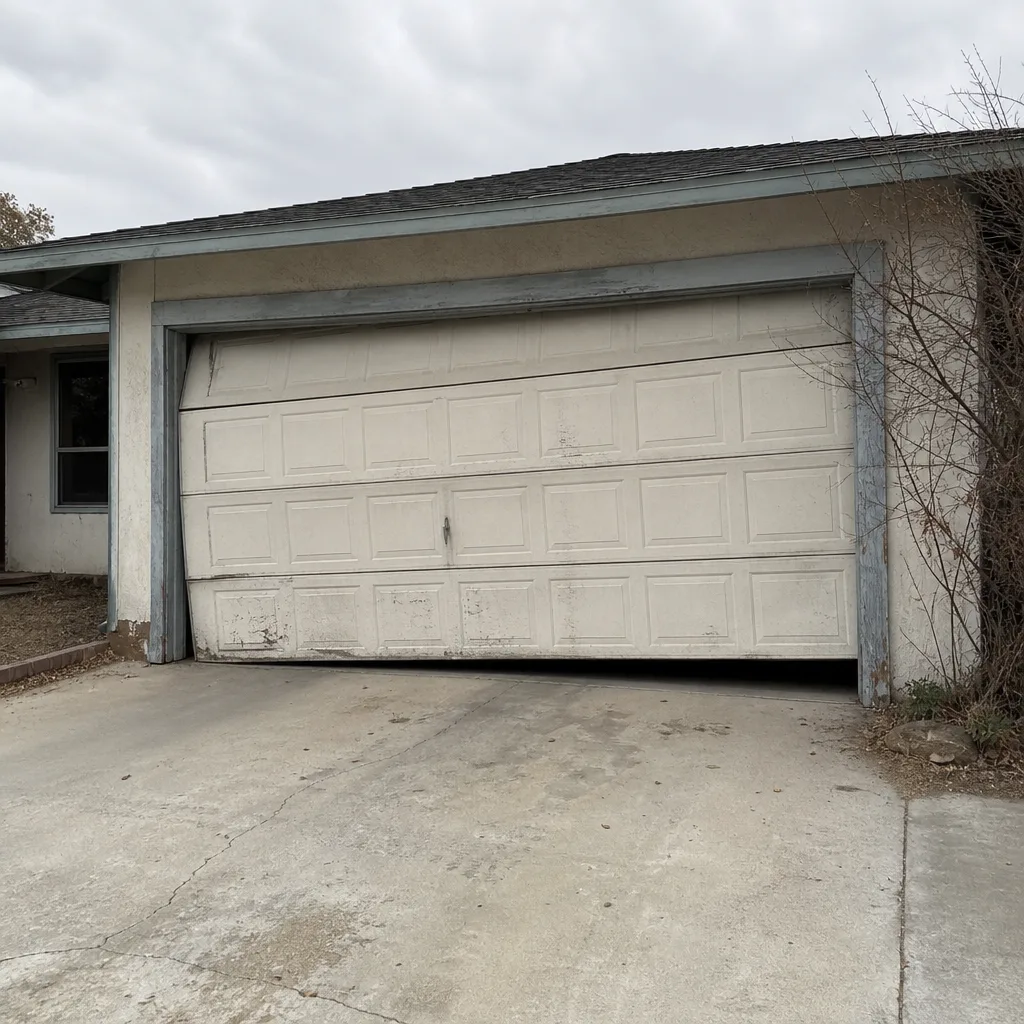 Before
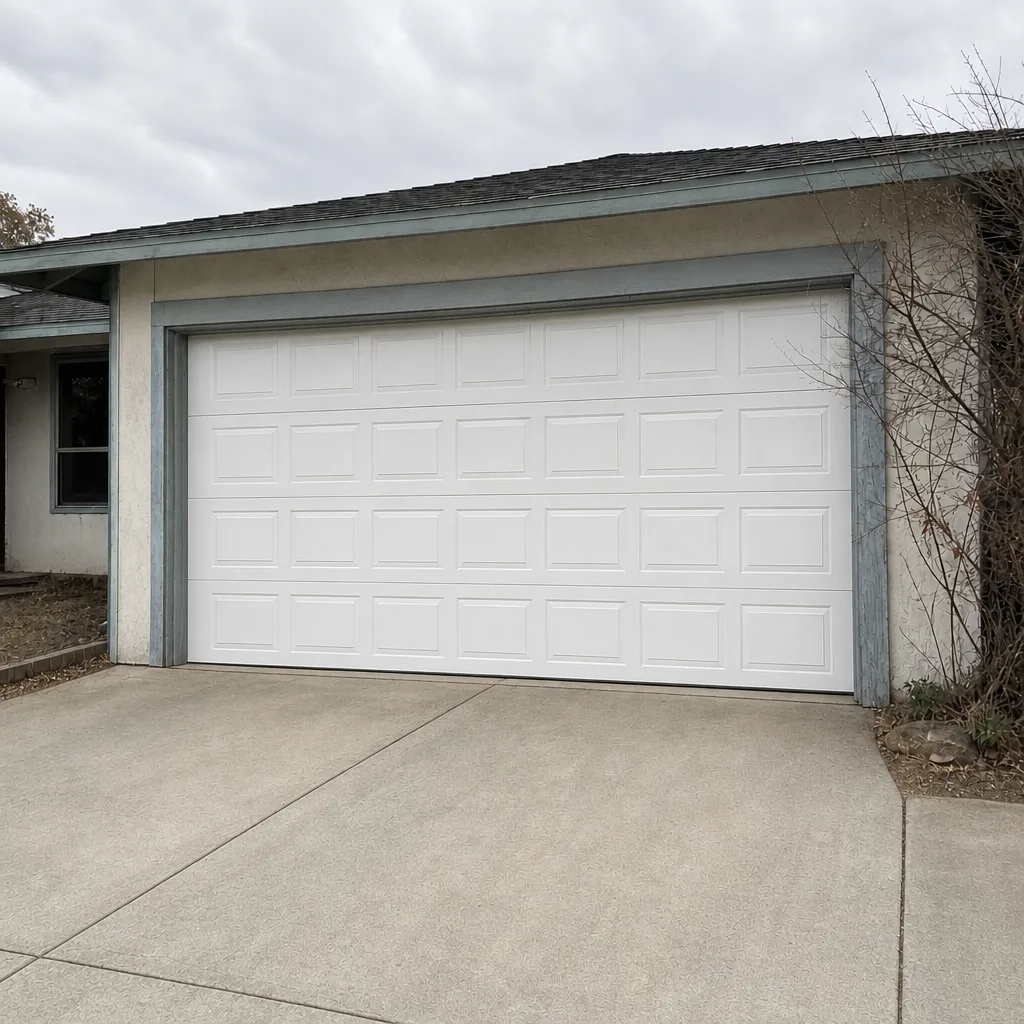 After
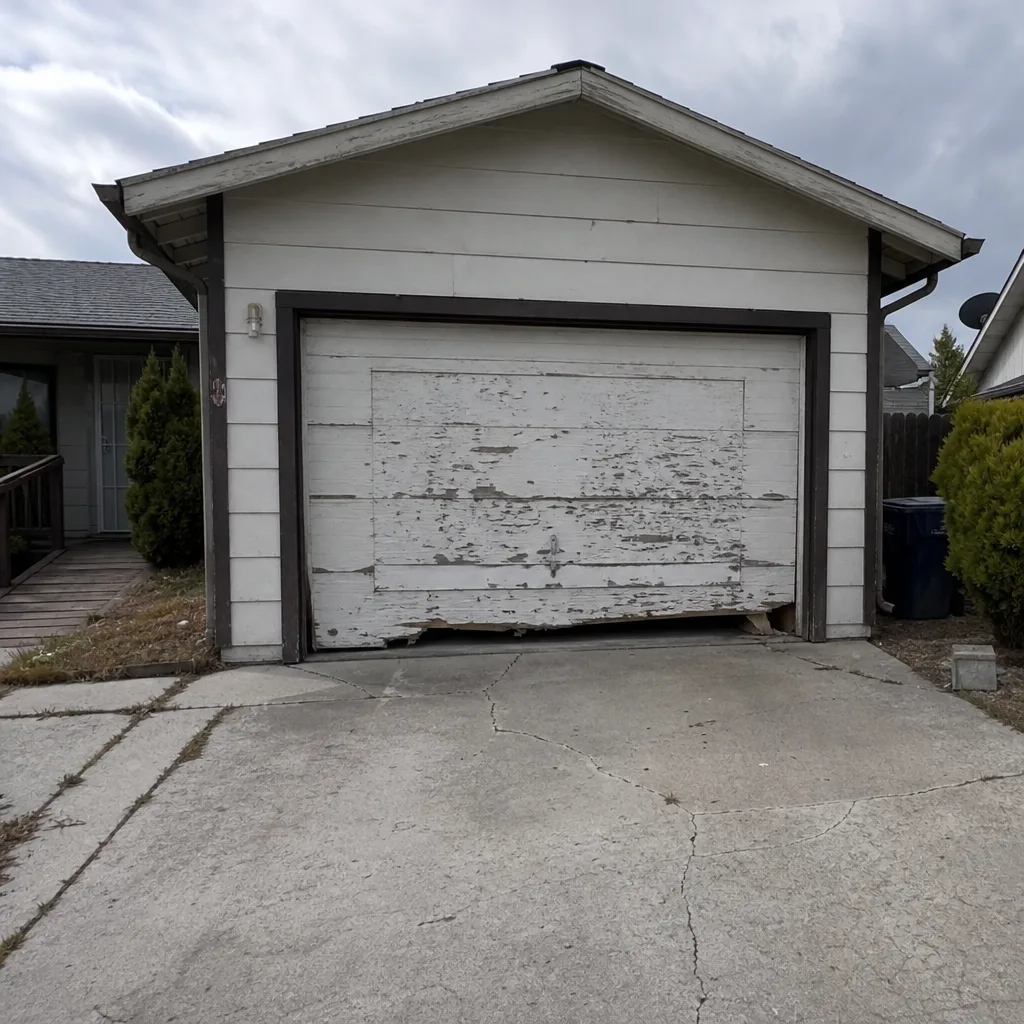 Before
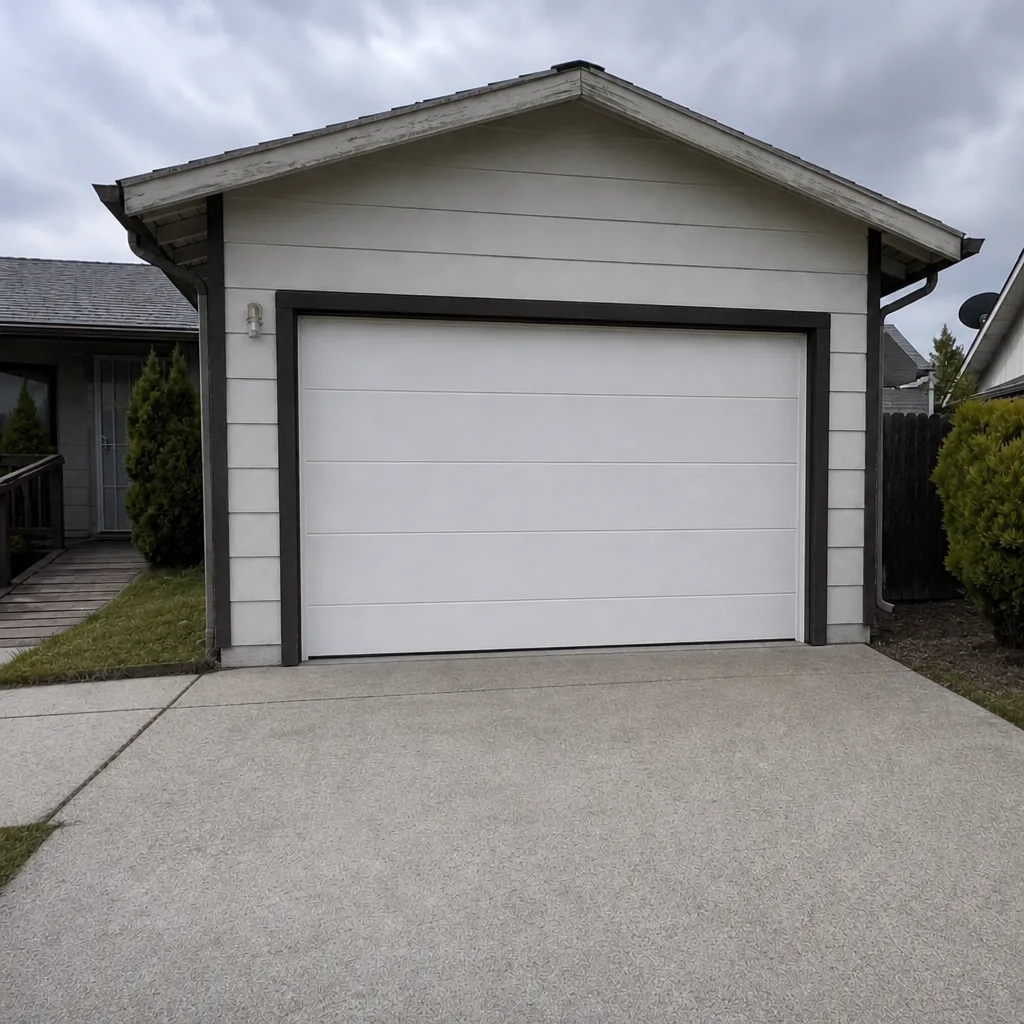 After
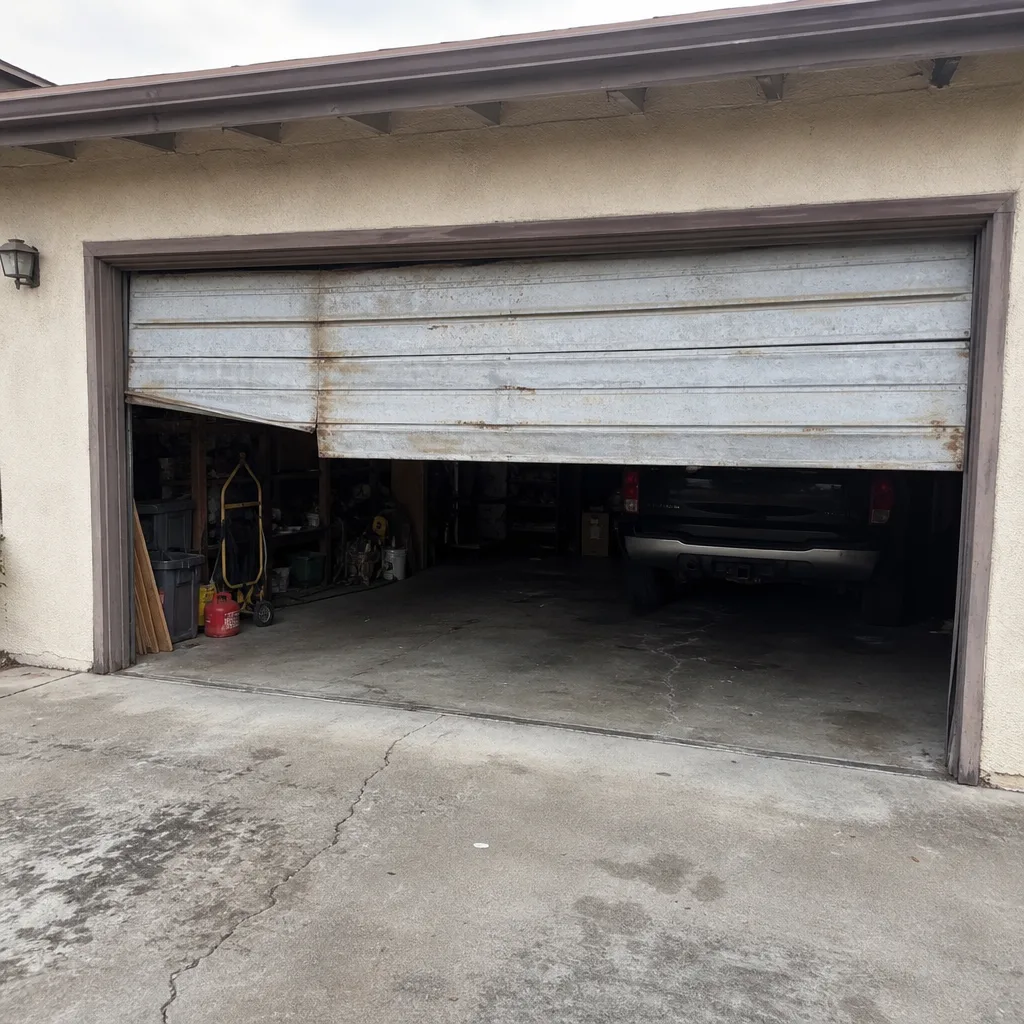 Before
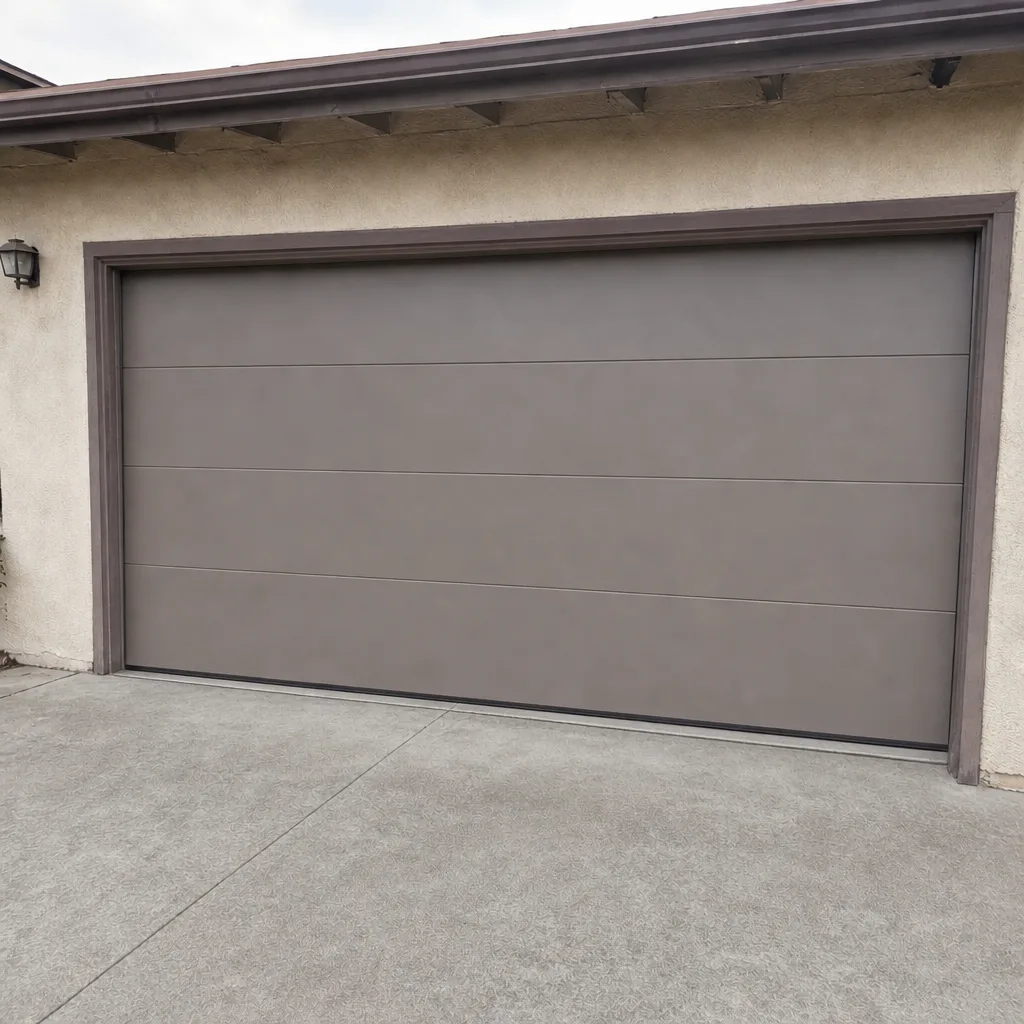 After
When to Call a Professional
Some garage door issues aren’t worth diagnosing yourself. If a torsion spring has snapped, the door is too dangerous to lift by hand and you should stop using it until a technician is on site. High-tension springs and cables store enough energy to cause serious injury, and this isn’t a component to replace without training. The same goes for anything involving the electrical panel feeding the opener, or a door that’s come off its track and is resting at an angle. Safety sensors that won’t stay aligned after a reset, or an opener that keeps tripping the breaker, are also worth a professional look. Calling early usually costs less than waiting until the door falls.
Northwind Garage Door Repair offers free estimates in Enterprise – call (888) 915-1004. We answer 24/7. Fast dispatch from 7am to 7pm, Sunday through Friday.
Frequently Asked Questions
Most repairs in Enterprise fall into the low-to-mid hundreds of dollars for common issues like spring replacement, cable repair, or opener fixes. Full door replacement runs higher and depends on size, material, and insulation. The written estimate is the final price, and we quote it before any work starts. Call (888) 915-1004 for an exact quote – estimates are free.
Often yes, especially for a full door replacement, but the rules depend on scope and address. Enterprise is in unincorporated Clark County, not inside Las Vegas city limits, so call the Clark County building department and ask specifically about your job before work begins. For spring, opener, or cable repairs, permits typically don’t apply.
Not without written approval. Enterprise HOAs often enforce specific color palettes, and a door color change without approval can trigger a violation. Pull your CC&Rs and architectural guidelines, submit an architectural review application if required, and get approval in writing before you order.
Phased neighborhoods here have mixed installs. You’ll find LiftMaster and Chamberlain openers widely, along with legacy Craftsman and Genie systems. On the door side, Wayne Dalton, Clopay, Amarr, and Raynor show up depending on when your street was built. We service all of those, so if your current company has said “we don’t service that brand,” call and tell us what’s on your label.
Most steel doors last 15 to 20 years with regular maintenance, but the desert heat shortens that for doors without proper insulation or factory finishes. Springs typically fail in 7 to 10 years, sometimes sooner on a west-facing door that runs every day. Regular lubrication and an annual safety-reverse check are the two cheapest ways to stretch both.
Same-day service is often available. Call (888) 915-1004 and describe what’s happening – especially whether the door is stuck open or stuck closed, since stuck-open is the urgent case. We answer 24/7. Fast dispatch from 7am to 7pm, Sunday through Friday. A call outside dispatch hours is booked into the next opening.
The Bottom Line
Enterprise isn’t Las Vegas, and a garage door here needs to be spec’d for the actual conditions: 110°F-plus summers, unincorporated Clark County permitting, dense HOAs, and mixed-brand neighborhoods that one-brand shops can’t fully handle. The best decisions start with three questions. What does your HOA approve? What does your address require from the county? And what’s actually failing – the door or the opener? Get those right and the rest of the choice gets easier. Springs fail, panels age, openers wear out; none of that is a crisis if you know what’s coming.
Call (888) 915-1004 for a free estimate. We answer 24/7. Fast dispatch from 7am to 7pm, Sunday through Friday.
Written by the team at Northwind Garage Door Repair, serving Enterprise since 2018.